If your gut changed at 42, here's what's actually going on

Paid link disclosure: we may earn a commission, at no extra cost to you. How we choose recommendations.
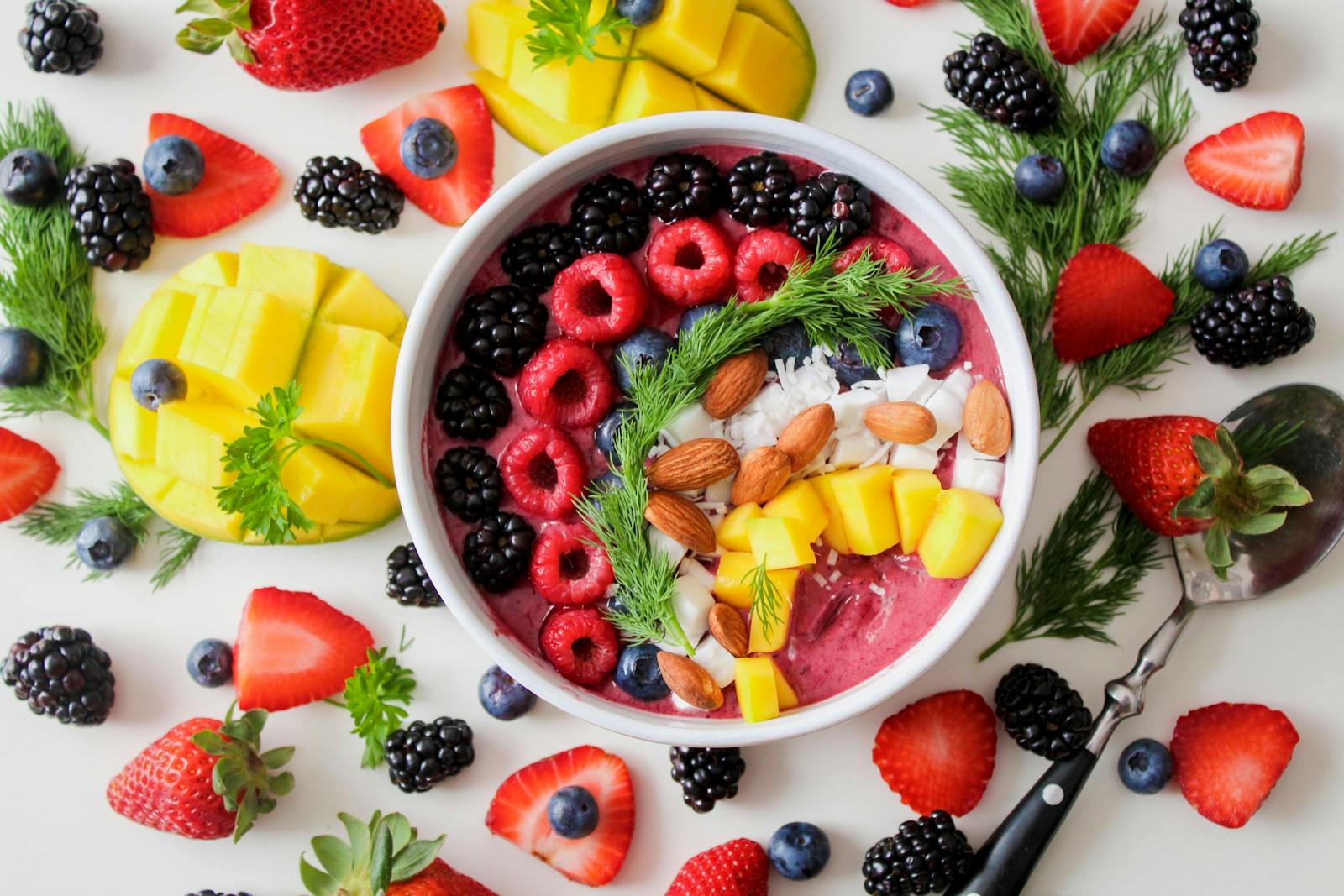
You woke up at 4 a.m. again, bloated for no reason, and Googled “perimenopause gut” before coffee. Same. Maybe last year you ate a salad and felt fine, and now the same salad leaves you puffy and foggy by 2 p.m. Coffee suddenly makes your stomach rebel. Your skin is breaking out in places it hasn’t since college. None of this is in your head, and you’re not “just stressed.” Your gut is responding to a hormonal shift almost nobody warned you about. Here’s what the research actually supports, plus three things the editorial desk would skip.
- The gut shift at 42 is driven by estrogen's quiet maintenance work falling away — thinner mucus, leakier junctions, less microbial diversity
- A 2023 gastroenterology review found microbial diversity tends to drop during perimenopause while inflammatory bacteria rise
- The same diet that worked at 32 may not work at 42 — the biological substrate underneath the food has changed
- Walking after meals, 30 plants a week, protected sleep, and downshifting stress outperform almost every shiny intervention being marketed
- Cutting twelve foods at once narrows microbial diversity further — the goal is variety, not elimination
The gut-hormone connection isn't woo
Estrogen is doing a lot of quiet maintenance work in your gut that nobody talks about. It helps maintain the mucus layer that lines your intestines. It keeps the tight junctions between gut cells snug. It influences how diverse the bacterial communities living in there are. When estrogen starts fluctuating in your late thirties and forties, that lining gets thinner and more permeable, and your microbiome shifts.
A 2023 review in a major gastroenterology journal looked at the estrobolome (the collection of gut microbes that metabolize estrogen) and found that microbial diversity tends to drop during the perimenopausal transition, while bacteria associated with inflammation tend to rise. That’s the mechanism behind the symptoms. Less protective mucus. Leakier junctions. Less microbial variety. More low-grade inflammation circulating through your system.
You also lose some of estrogen’s effect on gut motility. Estrogen helps regulate how quickly food moves through your intestines, which is part of why progesterone-heavy luteal phases used to make you constipated, and why post-40 transit time can feel unpredictable in a new way. Add a thinner mucus layer to slower or erratic motility, and you get the bloat-after-everything pattern that so many women describe. The same low-grade inflammation pattern also drives bloating that doesn’t respond to typical drugstore probiotics.
This is also why the same diet that worked at 32 may not work at 42. You’re not failing at eating. The biological substrate underneath the food has changed.
Why this shows up as a confusing cluster
The frustrating thing about perimenopause gut changes is that they almost never show up alone. You get bloating and brain fog and a sudden inability to tolerate red wine and a flare of adult acne and sleep that fragments at 3 a.m. Most doctors will treat each of those as a separate problem.
They’re not separate. They’re connected through the gut-brain axis and the gut-skin axis, two well-mapped communication networks. The vagus nerve runs directly from your gut to your brain, and roughly 90 percent of your serotonin is produced by gut cells, not brain cells. When the gut lining thins and inflammation rises, that signal travels upstream, and you feel it as brain fog, mood drops, or wakefulness at 3 a.m.
The bloating, the brain fog, the sleep fragmentation, and the new food sensitivities are not five separate problems. They are the downstream signal of one upstream shift in gut barrier and microbial diversity. Chasing each symptom with its own protocol usually means none of them resolve.
The gut-skin axis works similarly. Research over the last decade has connected gut barrier dysfunction with inflammatory skin conditions, including the kind of jawline breakouts that show up in your forties for no apparent reason. When the gut leaks more inflammatory signals into systemic circulation, the skin is one of the first places it surfaces.
Food sensitivities often follow the same pattern. As the mucus layer thins, larger food particles can interact with immune cells they normally wouldn’t meet, and your body starts mounting low-grade reactions to foods you’ve eaten your whole life. This is why cutting out gluten or dairy sometimes helps, and why it sometimes doesn’t. The underlying issue is the barrier, not the food.
Sleep fragmentation often closes the loop. Disrupted sleep alters cortisol patterns. Cortisol affects gut motility and microbial balance. A less balanced microbiome produces fewer of the metabolites your brain uses to regulate sleep. Once the cycle starts, it can be hard to tell which symptom started it.
Treating any one symptom in isolation usually fails. What actually moves the needle is supporting the whole system at once.
What actually helps (according to the research)
These four lifestyle shifts have the strongest evidence behind them for perimenopause-era gut support. None of them are flashy. All of them outperform what’s being marketed to you.
Walk after meals. Even ten minutes of gentle walking after eating helps regulate blood sugar and supports gut motility. A 2022 meta-analysis of post-meal walking studies found measurable improvements in glucose response with walks as short as two minutes. For a perimenopausal gut dealing with slower transit, this is one of the highest-payoff habits available.
Eat for microbial diversity, not perfection. Plant-variety research consistently points to the same finding: the single best predictor of a resilient microbiome is how many different plants you eat in a week, not whether you’ve cut out any particular food. Aiming for 30 different plant foods a week (herbs, spices, seeds, and nuts all count) supports a healthy gut microbiome more reliably than any elimination protocol.
Protect sleep more than almost anything else. Sleep loss directly disrupts the gut microbiome and increases intestinal permeability. Multiple controlled studies have shown shifts in microbial composition after just two nights of restricted sleep. If you’re choosing between an extra hour of sleep and an extra workout, the sleep is doing more for your gut.
Treat stress like medicine. Cortisol affects gut motility, mucus production, and microbial balance directly. You don’t need a perfect meditation practice. You need any consistent practice that downshifts your nervous system. A daily walk without your phone. Slow breathing for five minutes before meals. Time outside without a screen. Research on the gut-brain axis suggests these interventions support gut function as reliably as many dietary changes. The same nervous-system levers also tend to soften the anxiety pattern that often runs alongside gut symptoms in the forties.
Where targeted gut support fits in
The food-and-lifestyle pieces above are the foundation. Once those are in place, some women find that a targeted probiotic helps speed up the barrier-repair piece, particularly when the bloating started in the forties and lines up with hormonal changes. The probiotic aisle is mostly noise: single strains, low survivability, formulations built for a generic adult gut. What the research actually points to is multi-strain synbiotics designed around the hormonal gut shift specifically.
If you want to layer in a probiotic: a multi-strain synbiotic for the hormonal gut shift
If you want to layer in a probiotic, the research points to a multi-strain synbiotic built for the hormonal gut shift, not a single-strain drugstore pick. Garden of Life's Once Daily Women's fits that brief: 16 Lactobacillus and Bifidobacterium strains, organic prebiotic fiber to feed them, and a women's formulation — one capsule a day. Give the food foundation four weeks first, then add it if you want more support. It supports the gut microbiome; it does not treat or cure anything.
- 16 Lactobacillus + Bifidobacterium strains (multi-strain, not single)
- Organic prebiotic fiber included — a true synbiotic
- Women's formulation, one capsule a day (not a gummy)
Start with the free 34-symptom guide
Before any supplement: know what you are actually dealing with. Our free guide maps the 34 documented perimenopause symptoms (including the gut ones) to the hormone shift behind each, with what the research says helps. No product pitch, delivered instantly.
- All 34 symptoms with the underlying mechanism
- What the human research actually supports for each
- When to ride it out vs when to talk to a doctor
Three things the editorial desk would skip
Aggressive elimination diets. Cutting out twelve foods at once usually narrows your microbial diversity, which is exactly what your perimenopausal gut doesn’t need. If you suspect a specific food, work with someone who can guide a structured reintroduction. Don’t just live on chicken and rice for six weeks.
Expensive at-home stool tests for asymptomatic curiosity. The clinical research on consumer microbiome testing is unimpressive. The reports look detailed, the recommendations feel personalized, and the actual predictive value for what you should eat is low. If you have symptoms severe enough to warrant testing, those tests should be ordered by a GI doctor.
“Detox cleanses.” Your liver and kidneys are not waiting on a juice protocol to function. The strong fasting and laxative components of most cleanses can actively disrupt the microbial diversity you’re trying to rebuild, and a few days of broth doesn’t repair a gut barrier that took years to thin. If anything, the cortisol spike from severe caloric restriction tends to make perimenopausal gut symptoms worse.
When to actually see a doctor
A primer like this is not a substitute for real care. Book an appointment if you see blood in your stool, are experiencing severe or escalating abdominal pain, are losing weight without trying, are waking from sleep with pain, or are noticing a sudden and dramatic change in bowel habits that doesn’t resolve in a few weeks. Those warrant a real GI workup, not self-treatment.
Where to start
Your gut at 42 isn’t broken. It’s adapting to a hormonal shift nobody handed you a manual for. The boring fundamentals (walking, plant variety, sleep, stress) outperform almost every shiny intervention being marketed to you. Start there, give it sixty days, and pay attention to what your body tells you. If energy is part of the picture and the afternoon crash is what hits hardest, the mitochondrial side of perimenopause exhaustion is the companion piece worth reading next.
This article is for informational purposes only and is not medical advice. Statements about supplements have not been evaluated by the Food and Drug Administration. Speak with your physician before starting any new regimen. This article contains affiliate links; see our disclosure page for details.