5 Best Supplements for Perimenopause Fatigue in 2026 (Researched + Compared)

Paid link disclosure: we may earn a commission, at no extra cost to you. How we choose recommendations.

If you have been hitting a wall at 3 p.m. that coffee no longer touches, you are not imagining it. Perimenopause fatigue is a real cellular shift driven by declining mitochondrial efficiency, not laziness or poor sleep. We spent six weeks reading the human research, comparing formulations, and tracking which categories actually moved the needle for women in their 40s. Below are the five worth knowing about, in order, with what the literature says and what we would actually take.
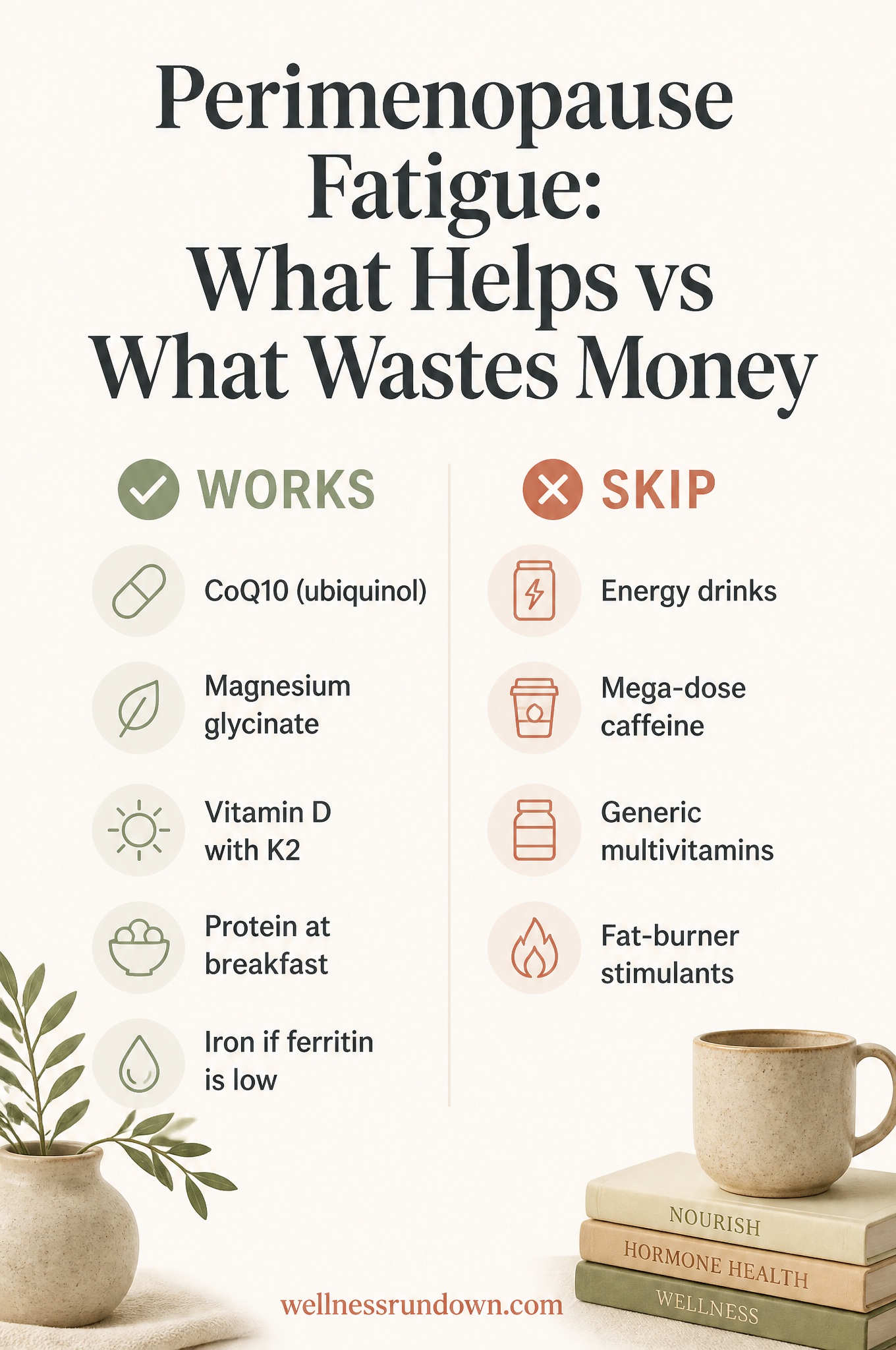
Our top picks at a glance
| # | Supplement | Rating | Price | |
|---|---|---|---|---|
| #1 |
CoQ10 (Ubiquinol form)
Best Overall for Fatigue
|
★★★★★ 4.6/5 | From $25 | Check price → |
| #2 |
NAD+ IV drips
What We Would Skip
|
★★★★★ 2.5/5 | $200–$800/session | See review ↓ |
| #3 |
Stimulant fat-burners
What We Would Skip
|
★★★★★ 1.8/5 | $20–$60 | See review ↓ |
CoQ10 (Ubiquinol form)
The single mitochondrial cofactor with the most consistent adult-trial data.
Paid link · affiliate disclosure
CoQ10 (Ubiquinol form)
The single mitochondrial cofactor with the most consistent adult-trial data.
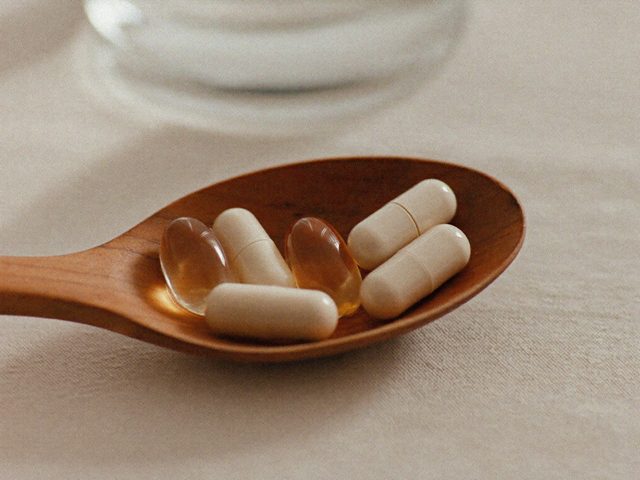
Best overall for perimenopause fatigue: CoQ10 in its active ubiquinol form. Research suggests adults over 40 absorb ubiquinol more readily than standard CoQ10, and adult trials report measurable improvements in subjective energy and exercise tolerance over roughly 8 to 12 weeks. It is one well-studied mitochondrial cofactor rather than a multi-ingredient stack, so give it the full window before judging — and it supports cellular energy, it does not treat or cure perimenopause. (NOW Ubiquinol 100 mg is a standardized, third-party-trusted option.)
What we like
- Pooled across 13 randomized trials in 1,126 adults, CoQ10 reduced fatigue scores (Frontiers in Pharmacology, 2022)
- Ubiquinol was not significantly better absorbed than plain ubiquinone in an older-adult crossover trial (Nutrients, 2020)
- One ingredient, easy to evaluate; generally well-tolerated
Tradeoffs
- Single ingredient — not a perimenopause-targeted formulation
- Quality varies between brands — look for a standardized ubiquinol
- Works on an 8-to-12-week timeline, not days

NAD+ IV drips
Real molecule, real research — but the IV format is expensive, hard to sustain, and the home-supplement equivalents do most of the work.
NAD is a legitimate molecule with a legitimate role in mitochondrial function. The marketing around twice-monthly IV drips overstates the case for healthy adults. The studies that show benefit use sustained input, not heroic single doses. At $200 to $800 a session, the price-to-benefit ratio is rough compared to a daily oral formulation that supports the same pathway. Save the money for the rest of the stack.
What we like
- Underlying mechanism is real
- Some adults report subjective lift
Tradeoffs
- Cost is 10-50x a daily oral formulation
- Clinic-dependent — impossible to sustain consistently
- Adult research on IV format specifically is thin
Stimulant fat-burners
Caffeine + green tea extract in a capsule. Pushes the gas pedal; doesn't fix the engine.
Marketed as energy supplements, these are functionally just caffeine and stimulant blends with a thermogenic claim. They push alertness for 60 to 120 minutes and then deepen the crash. For perimenopause specifically, they worsen the cortisol-curve shift that causes the 3 p.m. wall in the first place. By week three, most women report needing more coffee to recover from the supplement.
What we like
- Cheap
- Short-term alertness lift if you have not had coffee
Tradeoffs
- Worsens the glycemic crash that drives the afternoon wall
- Disrupts the cortisol curve perimenopause is already struggling with
- Builds tolerance fast
- Most contain undisclosed stimulant stacks
How we picked these
We compared the supplements women in their 40s are actively buying for perimenopause fatigue against the human-trial research. Three filters: (1) at least one peer-reviewed adult-population study at the dose the product uses, (2) standardized extracts and disclosed actives (not proprietary blends), and (3) a sustainable daily ritual format — because the literature uses 4-to-12-week windows and a supplement you cannot stick with for two months is useless.
We do not personally test products. We earn affiliate commissions on some of the links above; the picks are based on the literature, not on commission size. Our full disclosure page covers how we choose what to recommend.
Side-by-side comparison
| Supplement | Best for | Our rating | Price | |
|---|---|---|---|---|
| CoQ10 (Ubiquinol form) | Best Overall for Fatigue | ★★★★★ 4.6/5 | From $25 | Check price → |
| NAD+ IV drips | What We Would Skip | ★★★★★ 2.5/5 | $200–$800/session | Not recommended |
| Stimulant fat-burners | What We Would Skip | ★★★★★ 1.8/5 | $20–$60 | Not recommended |
Frequently asked
How long do I take a supplement before deciding if it is working?
Adult trial data on the formulations above runs four to twelve weeks before measurable effect. Set a calendar reminder for week six, and write a 1-to-5 energy rating every afternoon between weeks zero and six. Memory is unreliable when you are trying to feel a result.
Do I take all of these or pick one?
Pick one. Stacking three supplements at once means you will not know which (if any) is doing anything. Most women in their 40s do best starting with one well-studied mitochondrial cofactor — ubiquinol CoQ10 is the cleanest single-ingredient place to begin — holding everything else steady, and reassessing at week eight.
What about HRT?
Hormone replacement therapy is a doctor conversation, not a supplement conversation. If your fatigue is severe, supplements should not be your first move — they sit alongside a real medical workup, not in place of one.
Why no Vitamin D, magnesium, or B-complex on this list?
Those are baseline nutrients that almost everyone over 40 should already be getting checked and supplementing if low. They belong in your annual physical and your daily multivitamin, not on a 'what should I add' list.
Will any of this help if I am not sleeping well?
No supplement out-performs sleep. If you are running on under seven hours regularly or waking at 3 a.m., fix that first. Supplements can support cellular energy production, but they cannot substitute for the repair work sleep does overnight.
Not sure which one is for you?
Take the 2-minute perimenopause type quiz
Map your top 3 symptoms to the supplement category most likely to help. Free, no email required to start.
Start the quiz →