Night sweats after 40: why they follow a pattern most women miss

Paid link disclosure: we may earn a commission, at no extra cost to you. How we choose recommendations.
- Night sweats in perimenopause come from a narrowed "thermoneutral zone." Fluctuating estrogen makes your hypothalamus overreact to tiny, normal temperature shifts.
- They cluster in a pattern: worse in the week before a period, worse in the first half of the night, and often paired with a racing heart on waking
- Alcohol, late spicy meals, and an over-warm room each widen the trigger window. They don't cause the sweats, but they hand the thermostat an excuse.
- A 65-67°F room, moisture-wicking layers, paced breathing at onset, and a doctor conversation about hormone therapy are the levers with real evidence behind them
- Drenching sweats with fever, weight loss, or that soak through bedding nightly deserve a medical workup. Not every night sweat is hormonal.
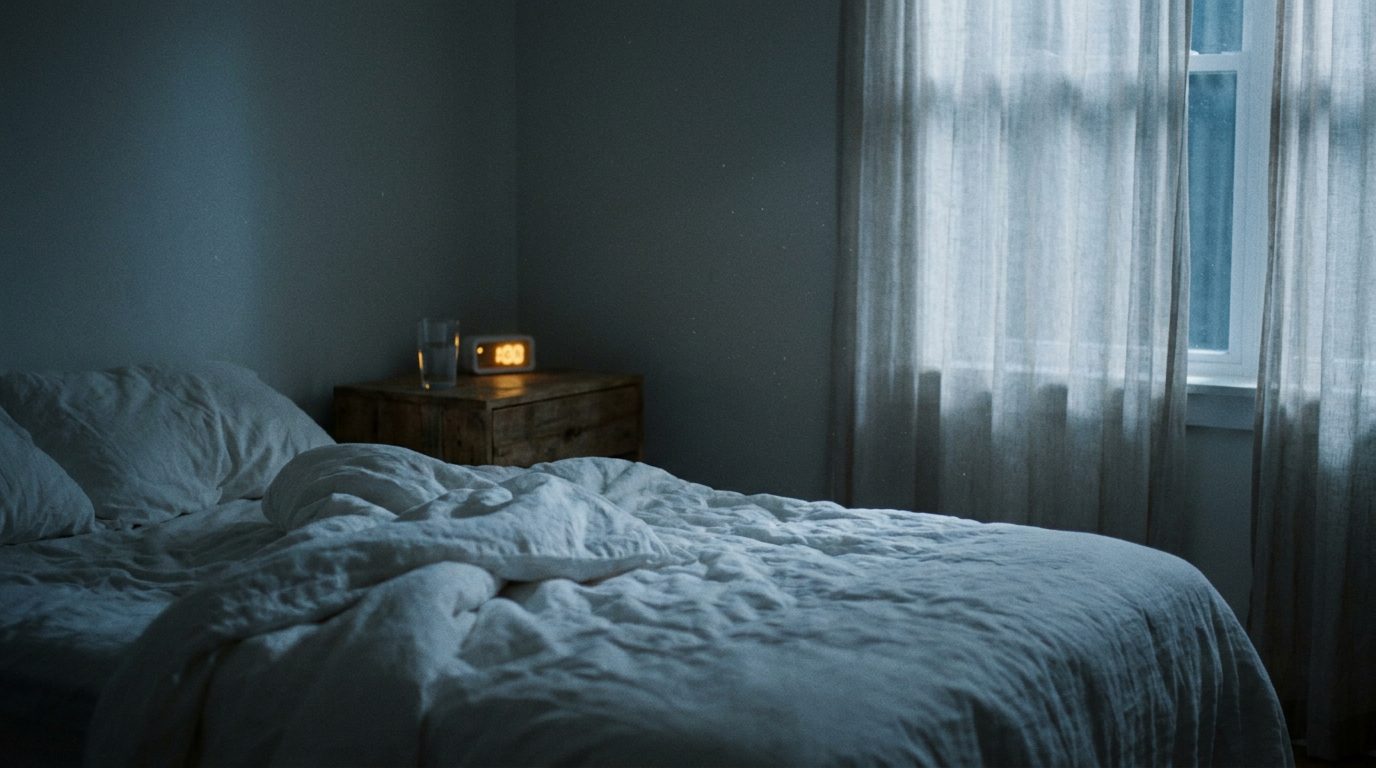
It starts the same way most nights it happens. You fall asleep at a normal temperature, under the same duvet you’ve used for years. Two hours later you surface, damp at the neck and chest, sheets clinging, heart going a little too fast. You kick the covers off, cool down, drift back. An hour later you’re pulling them back on because now you’re cold. By morning the bed looks like you fought something in it.
If this is happening in your forties, it almost certainly has a mechanism, and the mechanism has a pattern. Once you can see the pattern, the whole thing gets less mysterious. Here’s the mechanism, and what the research says helps.
The thermostat, not the temperature
The first thing to understand: night sweats are not a problem with how hot your bedroom is. They’re a problem with how your brain reads it.
Deep in the hypothalamus sits your thermoregulatory center, a thermostat that holds core body temperature inside a comfort band called the thermoneutral zone. Inside that band, small temperature drifts get ignored. Outside it, the body reacts: shivering below, sweating and vasodilation above.
Estrogen helps keep that band wide. When estrogen fluctuates (and in perimenopause it swings hard week to week rather than declining smoothly), the band narrows. Dramatically. A core temperature drift of a fraction of a degree, the kind your body produced every night of your thirties without incident, now crosses the line. The hypothalamus declares an emergency: blood vessels near the skin dilate, sweat glands fire, and you wake up flushed and damp while the room sits at the same temperature it always has.
That’s why the sweats feel so disproportionate. The trigger is tiny. The response is not.
The pattern most women miss
Night sweats look random. Track them for six weeks and they usually aren’t. Three patterns show up again and again in the research and in symptom diaries.
They cluster before your period. Estrogen takes its steepest dive in the late-luteal phase, the week before bleeding starts. If your sweats stack up in that week and ease off mid-cycle, you’re looking at the hormonal signature. It’s also why women with cycles that are still regular get dismissed with “you’re too young for this.” The cycle can look normal on a calendar while the hormone amplitude behind it swings harder every year. (This is the same reason perimenopause can start while your periods are still regular.)
They front-load the night. Sweats concentrate in the first half of the night, when deeper sleep stages dominate and core temperature is making its steepest natural descent. A narrowed thermoneutral zone turns that normal descent into a trigger. If you’re waking damp at 1 a.m. rather than 5 a.m., that’s the physiology working exactly as the research describes.
They travel with a racing heart. The sweat response is a sympathetic nervous system event, and heart rate rises with it. Many women interpret the pounding heart as anxiety. It can certainly feed the anxiety that seems to arrive from nowhere in your forties, but the sequence usually runs heat first, adrenaline second.
Writing the pattern down matters for a practical reason: it’s exactly the evidence a good doctor needs to distinguish hormonal night sweats from the other causes. It turns a vague complaint (“I sleep hot”) into a documented vasomotor pattern that supports real treatment options.
Cooling the room helps, but it works by giving your body more headroom before a drift crosses the narrowed line, not by fixing the line itself. That's why a fan alone blunts the mild nights and does nothing on the cluster nights before your period. The room is one lever. The thermostat is the problem.
Night sweats vs. the 3 a.m. wake-up
These two get lumped together, and they’re different animals. The 3 a.m. bolt-awake wake-up is primarily a cortisol-and-progesterone story: the natural pre-dawn cortisol rise poking through a thinned GABA buffer. Night sweats are an estrogen-and-thermostat story. You can have either without the other.
The distinction matters because the fixes differ. The 3 a.m. wake-up responds to blood-sugar management, alcohol timing, and progesterone-pathway support. Night sweats respond to thermal management, trigger control, and, with the strongest evidence of anything on the list, estrogen-based therapy prescribed by a doctor who knows your history. If you have both, you’re not unlucky. You’re in the years where both hormones are moving at once, and the perimenopause timeline explains why the late-thirties-to-mid-forties window stacks symptoms this way.
What the research actually supports
Cool the room to 65-67 degrees, and cool the bed more. Core temperature needs to fall about two degrees for consolidated sleep. Give it every assist: a genuinely cool room, breathable bedding, and layers you can shed half-asleep. If you share a bed with a heat-radiating partner, a split-duvet arrangement is unglamorous and effective.
Moisture-wicking sleepwear and sheets. This doesn’t prevent a sweat; it shortens the aftermath. The difference between waking damp for ninety seconds and lying in cold wet cotton for an hour is mostly fabric. Lightweight merino or technical-fiber sleepwear and percale or bamboo-derived sheets dry fast enough that one sweat doesn’t cost you the rest of the night.
Paced breathing at onset. When you feel the heat surge start, slow exhale-weighted breathing (in for four, out for eight) leans on the vagus nerve to dampen the sympathetic cascade riding alongside the sweat. The evidence for breathing as a hot-flash preventer is mixed. As a way to keep one sweat from turning into forty minutes of wired wakefulness, though, it’s cheap, safe, and it works on the part you can control.
Magnesium glycinate at night. Not a night-sweat treatment. The research doesn’t support that claim, and you should be suspicious of anyone selling it that way. What it supports is the GABA pathway that helps you fall back asleep after one, and sleep quality itself changes how disruptive the sweats feel. Think of it as improving your recovery, not preventing the event.
The doctor conversation, specifically about hormone therapy. Here’s the part wellness content tends to whisper: for moderate-to-severe vasomotor symptoms, menopausal hormone therapy has the strongest evidence of any intervention, by a wide margin. For many women in their forties the risk-benefit conversation looks very different than the headlines from twenty years ago. There are also newer non-hormonal prescription options targeting the brain pathway behind flashes directly. None of this is a decision to make from a blog post. It’s a decision to make with a clinician, armed with your six-week symptom diary. Our checklist of what to track before that appointment exists for exactly this conversation.
The triggers that widen the window
None of these cause night sweats. All of them make a narrowed thermoneutral zone easier to cross.
Alcohol is the big one. It vasodilates on the way in and rebounds your nervous system on the way out, typically 3-4 hours after the last drink. A glass of wine at dinner is, for many women, the difference between a dry night and a 1 a.m. soak. It also independently wrecks the deep-sleep stages, which is why it earns the “single biggest controllable saboteur” title for perimenopause sleep generally.
Late, heavy, or spicy meals raise core temperature during digestion, which is exactly the drift that now triggers a response. Front-load calories earlier; keep dinner light and at least three hours before bed.
Caffeine after noon doesn’t trigger sweats directly, but it shallows sleep architecture, and shallow sleep makes every wake-up more likely to stick, thermal or otherwise.
An over-warm sleep surface. Memory foam holds heat against you all night. You don’t need to replace a mattress to fix it; a breathable topper or even swapping to percale sheets changes the microclimate where the drift actually happens.
Magnesium glycinate: the recovery lever, not the cure
To be clear about what this does and doesn't do: magnesium will not stop a night sweat. Nothing over the counter reliably does. What the glycinate form supports is the GABA pathway your brain uses to settle back into sleep after one, which is where most of the actual damage to your next day happens. The chelated 200 mg dose in well-studied formulas like Doctor's Best is the gentle, well-absorbed version (not the laxative magnesium oxide). Stack it under a cool room, wicking layers, and the doctor conversation, not instead of them.
- Supports the fall-back-asleep pathway, 200–400 mg before bed
- Chelated glycinate form, well-absorbed, not the laxative oxide
- A recovery aid layered under the real levers, not a vasomotor treatment
When night sweats are not perimenopause
Most night sweats in your forties are hormonal. Not all of them are, and the exceptions matter. See a doctor promptly, and say the words “night sweats” explicitly rather than just “sleeping badly,” if any of these are true:
The sweats are drenching and progressive, soaking through sleepwear and bedding night after night, getting worse rather than cycling.
They arrive with fever, unexplained weight loss, or new fatigue that doesn’t track your sleep. Infections, thyroid disease (both directions), and, rarely, lymphomas announce themselves this way, and every one of them is more treatable found early.
You’re on a medication that lists sweating. SSRIs and SNRIs are common culprits, and a dose or timing adjustment sometimes fixes the nights entirely.
Your gut says something else is wrong. A normal workup costs you one appointment. It also converts “probably hormones” into “confirmed hormones,” which makes every treatment decision after it easier.
If the workup comes back clean and the pattern matches the before-your-period, first-half-of-the-night signature described above, that’s not a dead end. That’s a diagnosis, and it happens to be the one with the best-evidenced treatment menu in all of perimenopause care.
The bigger picture
Night sweats sit in a strange spot: common enough that everyone’s heard of them, dismissed often enough that women spend years buying fans and blaming the duvet. The mechanism is real. A narrowed thermoneutral zone overreacts to normal temperature drift, and it produces a trackable pattern: clustering before your period, front-of-night timing, the racing heart. Track it for six weeks. Cool the room and the bed. Cut the alcohol for two weeks and watch what happens. Then take the diary to a doctor who treats perimenopause seriously, because this particular symptom has the strongest treatment evidence of anything in the transition. The fan was never the answer. The pattern is.
This article is for informational purposes only and is not medical advice. Statements about supplements have not been evaluated by the Food and Drug Administration. Speak with your physician before starting any new supplement or regimen. This article contains affiliate links; see our disclosure page for details.